
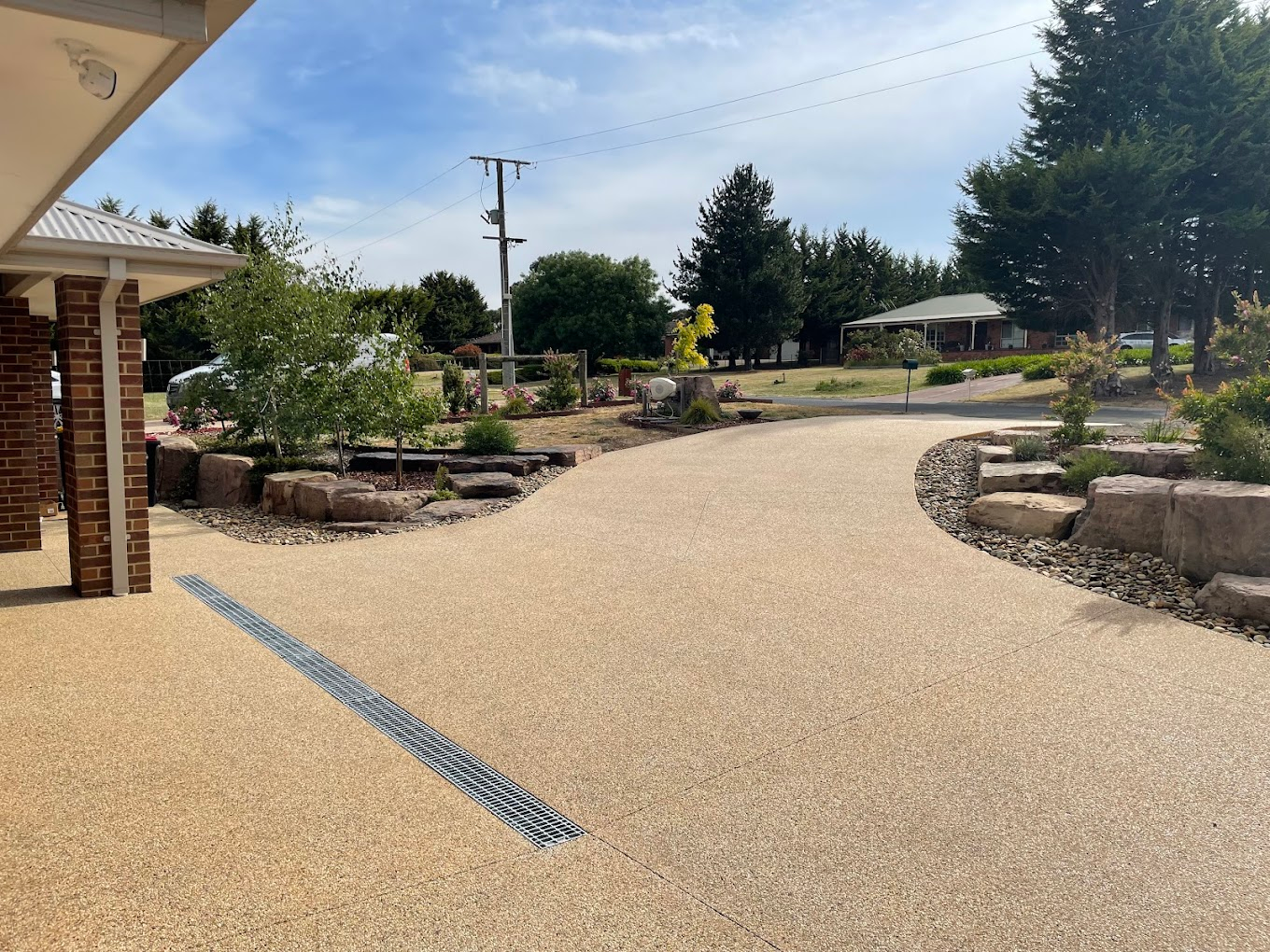
If your exposed aggregate driveway used to look crisp but has started to feel a little worn, you’re not alone. Exposed aggregate is a durable finish, but like any outdoor surface, it takes a beating from the weather, foot traffic, and everyday use.
When that happens, most homeowners start wondering whether the driveway can be refreshed, or if ripping it out and starting again is the only real option.
The good news is that a full replacement isn’t always necessary. In many cases, resurfacing can restore the look of your existing driveway without the cost or disruption of rebuilding from scratch. The key is knowing what resurfacing can genuinely fix, and when the problem might be deeper than the surface.
Below, we’ll explain when resurfacing makes sense, your options, and how to ensure the result holds up long-term.
What Does “Resurfacing” Mean for Exposed Aggregate?
Resurfacing typically involves applying a new cement-based layer (often called an overlay) over the existing concrete. It’s designed to improve the surface’s appearance and performance by creating a fresher, more even finish.
For homeowners, resurfacing can help with:
- A dull or faded appearance
- Patchy colour from UV exposure
- Stains that don’t lift with a normal cleaning
- Minor surface wear, pitting, or light scaling
- Small chips and hairline cracks (once repaired properly)
Because exposed aggregate concrete has a textured, stone-rich finish that is usually sealed, resurfacing is not as simple as “pouring over the top”. The bond between the old surface and the new layer matters. If that bond fails, the resurfacing can lift, crack, or wear unevenly.
Want a clearer picture of how exposed aggregate is finished and sealed? Have a read at our Guide To Exposed Aggregate Concrete
When Resurfacing Is a Good Option
Resurfacing works best when the slab underneath is stable, and the problems are mainly on the surface. Think of it as restoring what you already have, rather than rebuilding from scratch.
Your driveway is structurally sound
A solid base is the foundation of any successful resurfacing job. If the existing concrete isn’t moving, and there are no major structural cracks, resurfacing can be a great fit.
The damage is mostly cosmetic
If your driveway has lost its colour, looks uneven, or feels worn, resurfacing can bring it back to life. It’s especially useful if the driveway is still functional, but the finish no longer matches the look of your home.
You want a noticeable refresh without replacing everything
Replacing a driveway is sometimes the right decision, but it’s also the most disruptive option. If resurfacing is suitable, it can be a more cost-effective way to improve your home’s kerb appeal while keeping the existing concrete in place.
If you’re still weighing up surface options or you’re planning a new driveway altogether, it’s worth exploring our exposed aggregate driveway solution to compare finishes and outcomes.
When Resurfacing Might Not Be Worth It
Resurfacing is not designed to fix structural issues. If the slab is failing underneath, a fresh surface layer won’t stop the problem. In fact, it can sometimes hide early signs for a short time, only for cracks and movement to reappear later.
You may need deeper repairs or replacement if you notice:
- Large cracks that keep spreading or reopening
- Uneven sections where the driveway has lifted or sunk
- Water pooling due to poor drainage
- Areas that sound hollow or feel unstable underfoot
- Widespread breakdown across the slab
In these cases, the priority is understanding why the slab is moving or deteriorating. A resurfacing layer can only perform as well as the surface it is applied to.
Common Ways Exposed Aggregate Driveways Are Refreshed
Not every driveway needs the same treatment. Depending on your driveway’s condition and the look you’re aiming for, your options typically include:
Full resurfacing overlay
This is the most common “make it look new again” option. We fix any small issues first, prep the surface properly, then apply a fresh top layer over the existing concrete. The result is a cleaner, more even finish across the whole driveway.
Best for: driveways that are still solid, but look patchy, stained, or worn.
Covering a rough or “overexposed” finish
Sometimes the stones sit too high, or the surface has worn in a way that makes it feel harsh underfoot. Resurfacing can add a new layer that helps tone down the roughness, so the driveway feels smoother and more comfortable while still looking neat and modern.
Best for: driveways that look okay but feel too rough to walk on.
Resealing (when the concrete itself is still in good condition)
In some cases, the concrete is fine, but the protective sealer on top has worn out. If the driveway looks dull, the colour has faded, or water soaks in instead of beading on the surface, a professional clean and reseal can bring back that fresh, richer look.
Best for: driveways that are in good shape but have lost their shine and protection.
What Makes Resurfacing Last?
If resurfacing has a reputation for failing, it’s usually because of shortcuts in preparation. With exposed aggregate, this matters even more because older sealers, dirt, and surface contaminants can prevent the new layer from bonding properly.
A quality resurfacing process typically includes:
- Assessing the slab to identify damage, movement, and weak areas
- Repairing cracks and chips so the surface is stable and consistent
- Mechanical surface preparation to create the right profile for bonding
- Deep cleaning to remove residue, dust, and contaminants
- Applying the resurfacing system evenly across the driveway
- Sealing the surface for protection, colour depth, and easier maintenance
If you’re curious about the workmanship behind a high-quality finish, our guide on how we pour exposed aggregate is a helpful reference.
Resurfacing vs Replacement: A Simple Way to Decide
Here’s a practical rule of thumb:
- Choose resurfacing if the slab is solid and the surface looks tired.
- Choose replacement if the slab is failing or movement is the main issue.
If you’re not sure which category your driveway falls into, a quick on-site assessment usually makes it clear. We’d always rather help you choose the right solution upfront than see you invest in a surface fix that won’t last.
Ready to Refresh Your Driveway?
Not sure whether to resurface or start fresh? A Better Driveway can help you choose the best path based on the condition of your existing concrete, drainage, and the finish you want. Get in touch with our driveway contractors in Melbourne and we’ll point you in the right direction.